
Mesa Community College proudly announces the launch of its new Applied Behavioral Health program, now enrolling at the Red Mountain Campus. Developed in response to Arizona’s urgent mental health workforce needs, the program prepares students for meaningful careers in behavioral health care and direct patient support.
Arizona currently ranks 49th in the nation for access to adult mental health care, according to a 2023 ranking by the nonprofit Mental Health America. Meanwhile, demand for trained professionals is growing rapidly. The U.S. Bureau of Labor Statistics projects a 13% increase in psychiatric technician and aide jobs between 2023 and 2033 — well above average.
This two-semester, 22 to 22.5 credit Certificate of Completion, equips students with the skills needed to become behavioral health technicians or assistants. Graduates are eligible to test for Certified or Licensed Nursing Assistant (CNA/LNA) credentials, giving them a strong foundation in both physical and mental health care.
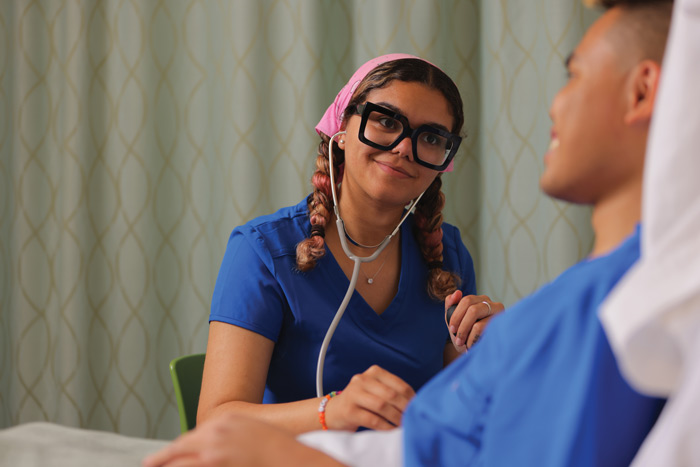
Students in the program receive hands-on training in:
- Bedside care and CNA skills
- Crisis response and de-escalation
- Trauma-informed communication
- Group dynamics and cultural competence
- Ethical standards and documentation
The program was designed by Kathy MacLeod, MSN, RN, in collaboration with the Maricopa County Community College District curriculum team in the Psychology, Social Work, Counseling, and Behavioral Health departments. The program is ideal for both new students and those already working in care settings who wish to expand their knowledge.
“This experience offers a powerful way to prepare students for the realities of working in a mental health
facility,” Kathy said. “They’re in a safe, controlled environment where they can practice, make mistakes, and learn without the pressures of a real-world setting.”
The program is unique, “as the mental health setting can be scary for students. Patients are vulnerable and in unstable conditions. Often students do not get to participate in critical situations like physical holds, while at a clinical rotation, due to the inherent risks involved,” Kathy added.
Thanks to funding from the Arizona Health Care Cost Containment System, students train in a newly built Behavioral Health Simulation Lab. This cutting-edge space includes a day room for group therapy, child-friendly care areas, seclusion and observation rooms, and safety-first features like ligature-free furniture and magnet-release doors.
Scholarships are available for students who commit to working in behavioral health positions after graduation, helping remove financial barriers to education and employment.
For more information, contact bht@mesacc.edu or visit mesacc.edu/programs/behavioral-health-sciences.